


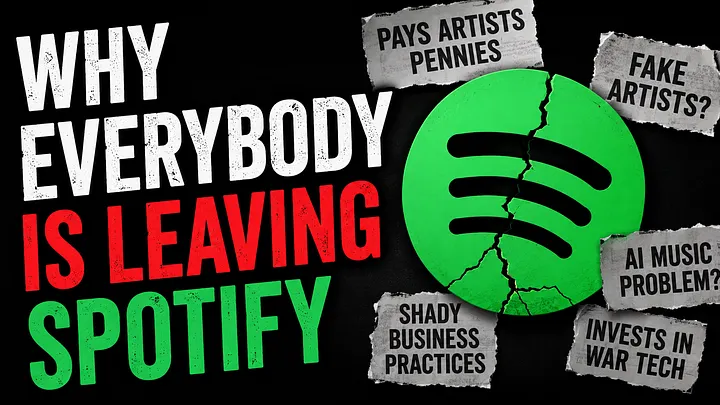

Why are people leaving Spotify in 2026? Explore rising subscription prices, artist boycotts, AI music concerns, streaming alternatives, and whether Spotify Premium is still worth it.
For years, Spotify has been the go-to music streaming platform for millions of people around the world.
It changed how we discover music, create playlists, listen to podcasts, and enjoy our favorite artists.
Instead of buying individual albums or downloading songs, listeners gained access to enormous music libraries through a single app.
But something has changed.
Across social media, online discussions, and music communities, more people are questioning whether Spotify still deserves their money.
Some are frustrated by subscription price increases. Others are concerned about how musicians are compensated. Some dislike the growing influence of artificial intelligence, while others are simply exploring alternative streaming services.
And then there are the artists who have publicly removed their music from the platform over ethical and financial concerns.
All of this has created a bigger conversation:
Is Spotify still the best place to listen to music, or are people finally getting tired of paying more for a service they once loved?
The answer is more complicated than the headlines suggest.
Despite the growing criticism, Spotify isn’t experiencing a mass exodus according to its reported subscriber numbers. In fact, its audience continued growing through the third quarter of 2026.
Still, the dissatisfaction is real for some listeners and artists.
Here are the major reasons people are reconsidering Spotify in 2026, and what you should know before deciding whether to stay or switch.
1. Spotify Premium Keeps Getting More Expensive
One of the biggest complaints about Spotify is the rising cost of its Premium subscription.
When music streaming first became popular, affordability was one of its main selling points.
For a relatively small monthly payment, listeners could access millions of songs without purchasing individual albums.
But subscription prices have increased over time.
In January 2026, Spotify raised the price of its U.S. individual Premium plan from $11.99 to $12.99 per month.
That followed earlier increases in 2023 and 2024.
For some customers, the additional dollar might not seem significant.
But the frustration becomes easier to understand when Spotify is only one of several monthly subscriptions.
A typical household may also pay for video streaming, cloud storage, mobile apps, gaming services, and other digital products.
Individually, each subscription may appear affordable.
Together, they can consume a noticeable portion of a monthly budget.
How much does Spotify Premium cost over a year?
At $12.99 per month, an individual subscription costs:
- $155.88 over 12 months.
- $311.76 over 24 months.
- $779.40 over five years, assuming the price remains unchanged.
For someone who listens to music every day, that may still represent excellent value.
But for occasional listeners, the expense might be harder to justify.
Why this matters
The issue isn’t simply that Spotify costs money.
It’s whether customers believe the service provides enough additional value to justify its changing price.
As subscription costs increase, consumers may become more willing to compare alternatives.
The takeaway: Spotify Premium can still be worthwhile, but rising prices are encouraging some listeners to reconsider their subscriptions.
2. Some Artists Are Leaving Spotify Over Ethical Concerns
One of the more controversial developments surrounding Spotify has involved artists publicly withdrawing their music.
During 2025, several musicians and bands announced boycotts connected to concerns about military technology investments and the broader economics of music streaming.
A major point of controversy involved Daniel Ek, Spotify’s co-founder and former CEO, and investments made through his venture capital firm, Prima Materia, in Helsing, a European defense technology company.
Some musicians objected to the connection between the streaming industry and military technology.
Artists reported to have removed music in protest included Deerhoof, Xiu Xiu, and King Gizzard & the Lizard Wizard.
Their decisions generated attention because they raised questions about the responsibilities of technology leaders and the ethical considerations behind consumer spending.
However, it’s important to distinguish between Spotify’s corporate activities and investments made separately by individuals associated with the company.
Why some listeners care
For certain music fans, choosing a streaming platform isn’t only about sound quality or price.
It’s also about whether the company’s practices align with their personal values.
Some listeners prefer services they believe are more transparent or more supportive of independent musicians.
Others separate their enjoyment of music from the business activities of streaming executives.
Both perspectives exist.
The takeaway: Artist boycotts have encouraged some listeners to think more carefully about where their subscription money goes.
3. Musicians Are Still Questioning How Much Spotify Pays
Another longstanding criticism of Spotify concerns artist compensation.
Streaming has made music more accessible than ever.
But the financial benefits aren’t distributed equally among musicians.
Popular artists with enormous audiences may generate substantial streaming revenue.
Smaller independent musicians can face a different reality.
Recording, producing, promoting, and distributing music all cost money.
For artists with modest streaming numbers, income from streaming alone may be insufficient to cover those expenses.
How Spotify royalties work
Spotify generally pays recording and publishing rights holders through royalty arrangements rather than paying every artist a fixed amount per stream.
What individual musicians ultimately receive depends on several factors, including their agreements with labels, publishers, distributors, and other rights holders.
This means widely circulated estimates of a universal Spotify payment per stream can be misleading.
Spotify also introduced a policy requiring tracks to reach at least 1,000 streams during the previous 12 months to qualify for certain recording royalty payments.
The company has presented this policy as one way to address royalty distribution and low-value content.
Critics argue that thresholds like this can make it more difficult for smaller artists to earn money from their recordings.
Why this matters to music fans
Some listeners want their favorite musicians to receive a greater share of the money generated by their music.
As a result, they may choose to support artists through concert tickets, merchandise, physical albums, or direct music purchases.
The takeaway: The debate over fair artist compensation is one reason some musicians and listeners are dissatisfied with the streaming model.
4. AI-Generated Music Is Raising New Questions
Artificial intelligence is changing the music industry.
AI tools can now assist with composing melodies, generating vocals, creating instrumentals, and producing complete recordings.
These technologies create opportunities for experimentation.
But they also raise concerns about authenticity, copyright, impersonation, and the visibility of human musicians.
Some listeners worry that streaming platforms could become crowded with low-effort, automatically generated content.
Artists may also be concerned about unauthorized imitations of their voices or musical identities.
What is Spotify doing about AI music?
Spotify has introduced measures aimed at reducing spam, impersonation, and misleading content.
In October 2026, the company reported that it had removed more than 75 million spam-related tracks from its platform for serious or repeated violations.
It also described efforts to keep low-quality or spam-like AI content out of recommendations and give artists more control over releases associated with their profiles.
These measures show that Spotify recognizes the problem.
However, the broader debate about AI-generated music is far from settled.
Why listeners are concerned
People often develop emotional connections with music because it represents human experiences.
A song might remind someone of a breakup, childhood memory, friendship, or important life event.
For listeners who value the creative process behind music, the possibility of increasingly automated content raises difficult questions.
The takeaway: AI is not automatically harmful to music, but transparency, authenticity, and fair treatment of creators are becoming important concerns.
5. Some Users Are Frustrated With Music Recommendations
Spotify’s personalized recommendations have long been among its most popular features.
Discover Weekly, personalized mixes, and algorithmic playlists help listeners find songs without searching manually.
But personalization doesn’t always work perfectly.
Some users feel that recommendations become repetitive.
Others say they keep encountering the same artists or musical styles.
A person who wants to discover unfamiliar genres may become frustrated when the platform repeatedly suggests songs similar to those they already know.
The problem with overly familiar recommendations
Recommendation systems often use listening behavior to predict what a user might enjoy.
This can be convenient.
But if recommendations become too predictable, listeners may feel that they’re discovering less music.
Imagine someone who enjoys jazz, electronic music, classical compositions, and alternative rock.
If they spend one week listening heavily to electronic music, they might not want their future recommendations to focus almost entirely on that genre.
The experience can begin to feel repetitive.
What can listeners do?
Spotify users can explore music beyond automatically generated playlists.
Searching for independent artists, following music publications, listening to full albums, and exploring unfamiliar genres can create a more varied listening experience.
The takeaway: Personalized recommendations are useful, but some listeners want greater control over what they discover.
6. The Spotify App Is Becoming More Than a Music Player
Spotify started primarily as a music streaming service.
Over time, it expanded into podcasts, audiobooks, video content, and additional creator features.
For some customers, these additions make the subscription more valuable.
Someone who enjoys music, podcasts, and audiobooks may appreciate having everything in one place.
But other listeners prefer a simpler experience.
They want to open an app, select a song, and listen without navigating several types of content.
The convenience versus simplicity debate
A platform offering more features isn’t necessarily better for every user.
Consider two listeners.
The first enjoys podcasts during commutes, audiobooks while exercising, and music throughout the day.
Spotify’s broader audio ecosystem may suit that person’s needs.
The second listens exclusively to music and prefers a straightforward interface.
That person may be less interested in features unrelated to music.
Neither preference is wrong.
The takeaway: Spotify’s expansion creates additional value for some users while making the service feel unnecessarily complicated to others.
7. Competitors Are Giving Listeners More Choices
Spotify no longer competes only with traditional music purchases or radio.
Several major streaming platforms offer extensive music libraries, personalized playlists, offline listening, and premium audio features.
This gives consumers more flexibility.
If someone becomes dissatisfied with Spotify’s pricing, interface, or business practices, they can investigate alternatives.
Popular Spotify alternatives in 2026
| Streaming Service | Why Someone Might Consider It |
|---|---|
| Apple Music | Integration with Apple devices, music-focused features, and lossless audio |
| YouTube Music | Music videos, live performances, and integration with the YouTube ecosystem |
| Tidal | High-quality audio options and a music-focused listening experience |
| Amazon Music | Integration with Amazon services and compatible devices |
| Deezer | Music discovery features and an alternative streaming experience |
| Bandcamp | Direct music purchases and opportunities to support artists |
These services have different pricing structures, catalogs, features, and regional availability.
The best choice depends on what matters most to you.
Some people prioritize affordability.
Others care about sound quality, playlists, artist compensation, or ease of use.
The takeaway: Consumers have more ways to listen to music, which makes it easier to reconsider a service they no longer enjoy.
8. People Are Becoming Tired of Monthly Subscriptions
Spotify is part of a much larger trend: subscription fatigue.
Over the past decade, more companies have adopted recurring payment models.
Consumers now subscribe to entertainment, productivity software, fitness programs, digital storage, news publications, and countless other services.
The advantage is convenience.
Instead of paying a large amount upfront, customers can spread costs over time.
But the disadvantage is that recurring charges can continue long after someone stops using a service regularly.
The hidden cost of subscription habits
Imagine someone paying for:
- Music streaming: $12.99 per month.
- Video streaming: $18 per month.
- Cloud storage: $10 per month.
- Gaming subscription: $15 per month.
- Other digital apps: $20 per month.
That’s $75.99 per month, or $911.88 annually.
These are illustrative amounts rather than a survey of typical spending.
The example shows why people may start reviewing subscriptions more carefully.
How to decide whether Spotify is worth keeping
Ask yourself three questions:
- How often do I actually use Spotify?
- Am I satisfied with the music, features, and listening experience?
- Would another service better match my needs or budget?
If you use Spotify every day and enjoy it, keeping your subscription may be perfectly reasonable.
If you barely open the app, canceling or switching to the free tier could make sense.
The takeaway: Spotify isn’t the only subscription people are questioning. It’s part of a broader reassessment of recurring digital expenses.
9. Some Music Fans Want to Own Their Music Again
Streaming offers access to enormous libraries.
But there’s an important difference between accessing music and owning a copy.
When you pay for a streaming subscription, you’re generally paying for access under the service’s terms.
You aren’t purchasing permanent ownership of every song in its catalog.
Music availability can also change because of licensing arrangements.
For some listeners, this creates frustration.
A favorite recording may become unavailable.
An album may disappear from a platform.
Or a person may decide they no longer want to pay a recurring fee to access music they’ve enjoyed for years.
Why physical and digital purchases still matter
Buying music can provide a different relationship with an album.
Some fans enjoy collecting vinyl records or CDs.
Others purchase downloadable music directly from artists or independent stores.
These options can provide lasting access, although digital purchases may still be subject to licensing terms and technical restrictions.
Owning music also doesn’t require abandoning streaming entirely.
Someone might use Spotify to discover artists and purchase favorite albums separately.
The takeaway: Some listeners want greater control over their music collections instead of relying exclusively on subscription access.
10. Trust and Personal Values Are Becoming Part of the Decision
For many consumers, choosing a company is no longer based entirely on price and convenience.
People may also consider business practices, transparency, privacy, treatment of creators, and ethical concerns.
This is especially relevant in industries where artists and creators depend on digital platforms.
Spotify’s controversies have encouraged some users to ask questions they previously ignored.
How are musicians compensated?
What happens when AI-generated content enters music libraries?
How much control do artists have over their work?
Are subscription price increases justified by improvements in the service?
These are reasonable questions.
However, criticism of a company doesn’t automatically mean every allegation is accurate or that every customer should stop using its services.
Different people weigh these issues differently.
The takeaway: For some listeners, choosing a music platform has become a decision about values as well as entertainment.
Is Everybody Really Leaving Spotify?
Despite the attention surrounding boycotts and cancellations, the available numbers tell a different story.
Spotify has continued adding subscribers and monthly active users.
Its reported figures show the following:
| Reporting Period | Monthly Active Users | Premium Subscribers |
|---|---|---|
| Q2 2026 | 777 million | 300 million |
| Q3 2026 | 788 million | 306 million |
These numbers demonstrate that Spotify’s overall user base continued growing during this period.
That doesn’t mean nobody is leaving.
Individual listeners may cancel, and some artists have publicly withdrawn their music.
But the evidence doesn’t support the claim that everybody is abandoning Spotify.
In reality, both trends can exist at once.
Some users leave because of dissatisfaction.
Others join because they enjoy the platform’s features, convenience, and music selection.
Many existing customers simply continue using it.
The important distinction is between a visible online backlash and a measurable decline in Spotify’s overall audience.
As of October 2026, Spotify’s reported audience is growing, not shrinking.
Should You Cancel Spotify Premium in 2026?
There’s no universal answer.
Spotify may still be worth paying for if you listen frequently, enjoy personalized playlists, use its additional audio features, and find the subscription affordable.
However, switching could make sense if you’re dissatisfied with the price, prefer another interface, want different audio features, or have concerns about the company’s practices.
Before canceling, consider these factors.
| Your Priority | What to Consider |
|---|---|
| Lower monthly spending | Compare current plans, free tiers, and subscription bundles |
| Sound quality | Check audio formats, supported devices, and headphones |
| Music discovery | Test recommendations and playlist tools |
| Artist support | Explore direct purchases, merchandise, and concert tickets |
| Podcasts and audiobooks | Compare which services offer the content you use |
| Existing playlists | Check available playlist-transfer options |
| Personal values | Review documented company policies and business practices |
The best music service isn’t necessarily the most popular one.
It’s the service that meets your needs at a price you’re comfortable paying.
How to Leave Spotify Without Losing Your Favorite Playlists
If you’ve decided to switch services, you don’t need to start your music collection from scratch.
A little preparation can make the transition easier.
Step 1: Choose your replacement service
Compare the features that matter most to you.
Check the available music catalog, subscription price, audio quality, device compatibility, and offline listening options.
Step 2: Review your existing playlists
Identify the playlists and albums you want to keep.
You may want to make a separate list of your favorite artists and recordings.
Step 3: Explore playlist-transfer tools
Some music services and third-party tools support transferring playlists between platforms.
Check their compatibility, privacy practices, and potential fees before granting account access.
Not every track will necessarily transfer successfully.
Step 4: Test the new platform
If a free trial or free tier is available, use it to explore the service before committing to a paid subscription.
Pay attention to music availability, recommendations, and ease of use.
Step 5: Cancel your old subscription if you’re satisfied
Once you’re comfortable with the replacement, review Spotify’s cancellation instructions and your next billing date.
Remember that deleting an app doesn’t necessarily cancel its subscription.
You may also be able to continue using Spotify’s free tier after canceling Premium.
Frequently Asked Questions
Why are people leaving Spotify in 2026?
Some listeners cite rising subscription prices, concerns about artist compensation, AI-generated music, ethical controversies, and dissatisfaction with certain app features. However, Spotify’s total reported audience continued growing through Q3 2026.
Is Spotify losing subscribers?
Spotify’s reported Premium subscriber count increased from 300 million in Q2 2026 to 306 million in Q3 2026. Individual customers may cancel, but the company’s overall subscriber base grew during that period.
Why are artists boycotting Spotify?
Some artists have protested concerns involving music streaming compensation and investments associated with Spotify’s co-founder in military technology. Individual artists may have different reasons for withdrawing their work.
Is Spotify Premium still worth it?
It depends on your listening habits, budget, and preferences. Frequent listeners who value Spotify’s catalog, recommendations, and features may find it worthwhile. Occasional listeners may prefer a free or lower-cost alternative.
What is the best alternative to Spotify?
Apple Music, YouTube Music, Tidal, Amazon Music, Deezer, and Bandcamp are options worth exploring. They serve somewhat different needs, so compare their current features and pricing before deciding.
Can I keep my playlists if I cancel Spotify?
Your playlists may remain associated with your Spotify account when you switch to the free tier, subject to the service’s terms. You can also investigate playlist-transfer tools if you’re moving to another platform.
Is Spotify removing AI-generated music?
Spotify has implemented measures targeting spam, impersonation, and misleading content, including certain AI-generated material. This doesn’t mean the platform has banned all music created with AI assistance.
Will Spotify become cheaper in the future?
Future subscription prices are uncertain. Spotify has increased prices in several markets, but there is no guarantee that prices will rise or fall in any particular region.
Final Thoughts: Spotify Isn’t Dying, but the Conversation Is Changing
Spotify remains one of the world’s largest music streaming platforms.
Its subscriber growth shows that millions of people continue to find value in the service.
But popularity doesn’t eliminate legitimate criticism.
Rising prices, artist compensation, AI-generated content, ethical concerns, and growing competition have encouraged some listeners to reconsider their loyalty.
And perhaps that’s the most important development.
For years, many people treated Spotify as the default place to listen to music.
Now, some are asking whether it still deserves that position.
The answer will depend on what individual listeners value.
For some, Spotify’s convenience, personalized playlists, and extensive catalog are worth the subscription.
For others, alternative platforms or direct music purchases may better match their priorities.
Everybody isn’t leaving Spotify in 2026. But the reasons some people are leaving reveal important questions about the future of music streaming.
And as listeners gain more choices, streaming companies may face increasing pressure to demonstrate why their services deserve a place in people’s monthly budgets.